Heritage Project
Subject Leaders: Mrs S Powell & Mrs L Ryall-White
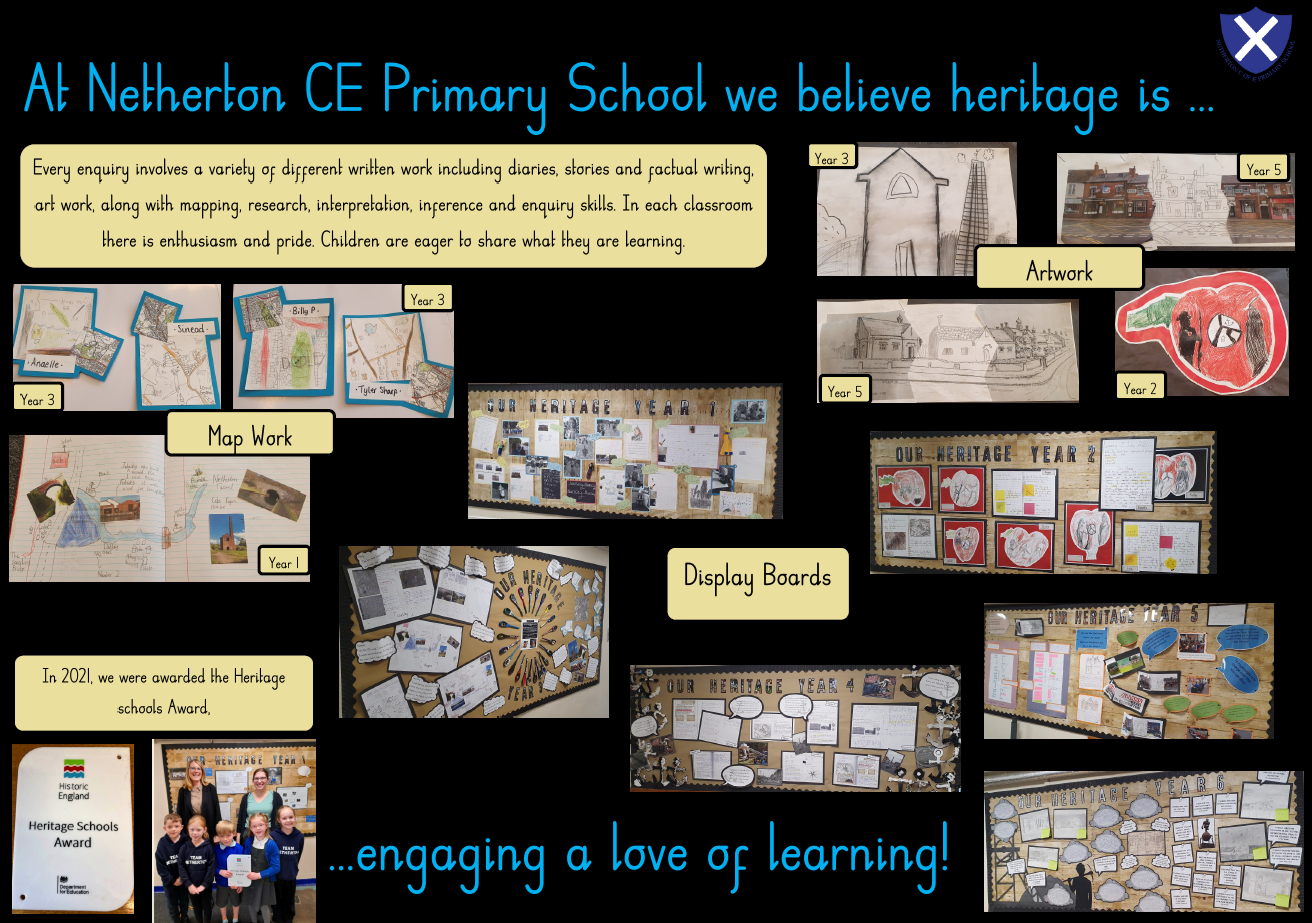
We are working with Historic England to advocate the inclusion of local heritage in a rich and exciting curriculum. Our curriculum is based on the wealth of local heritage that the Black Country has to offer. Our children explore the history of their local community enabling them to understand their past and how it affects their own lives and the future alongside fieldwork in the Summer Term. Children have the opportunity to visit their local area and spot physical and human features. They also look at how this affects the environment that surrounds the local area.
Intent
At Netherton C E Primary School, we want children to understand that history and geography are all around them. Our Heritage Curriculum is designed to develop curiosity about the place in which pupils live, help them understand how Netherton has changed over time and enable them to recognise how people, landscape, settlement and community are connected.
The project complements our school vision strand of ‘I can grow’. Beginning in Reception, pupils are introduced to key historical and geographical concepts that prepare them for the National Curriculum in Year 1. From Year 1 onwards, carefully sequenced learning enables children to revisit, deepen and apply their knowledge so that they progressively become local experts.
The History and Geography subject leaders have deliberately planned the progression of disciplinary skills. Geography has a strong focus on mapwork and fieldwork. History develops pupils’ use of primary sources, historical enquiry, census evidence and the concepts of continuity and change. These strands are revisited with increasing sophistication as pupils move through school.
We want pupils to ask perceptive questions, observe their surroundings carefully, interpret maps and sources, gather evidence in the field, make comparisons, identify patterns of continuity and change and use evidence to reach conclusions. The local area provides a meaningful context in which these skills can be brought together.
Our ultimate aim is that pupils leave Year 6 with a strong sense of place and belonging, a rich knowledge of their local heritage and the confidence to investigate the world around them as historians and geographers.
Implementation
The Heritage Curriculum is taught across the whole school during the Summer Term. Reception to Year 6 take part in a progressive Heritage Project, with each year group studying an age-appropriate aspect of the local area. Planning has been constructed jointly through the History and Geography curriculum so that knowledge and skills deliberately build upon previous learning.
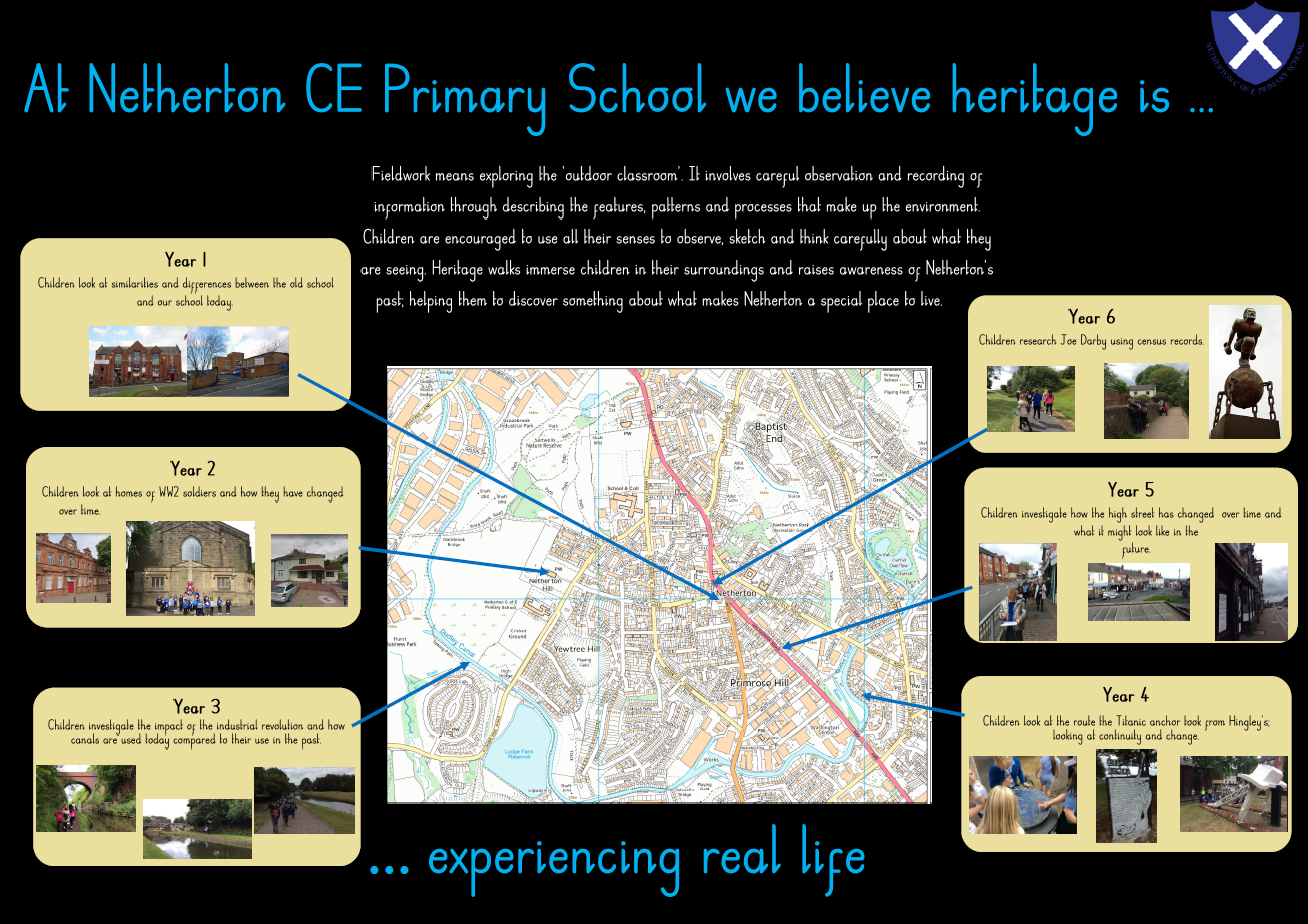
Every year group undertakes a Heritage Walk in the local area. These walks are not an isolated enrichment activity: they are an integral part of the curriculum and provide authentic opportunities for fieldwork, observation, map use, questioning and the examination of local historical evidence.
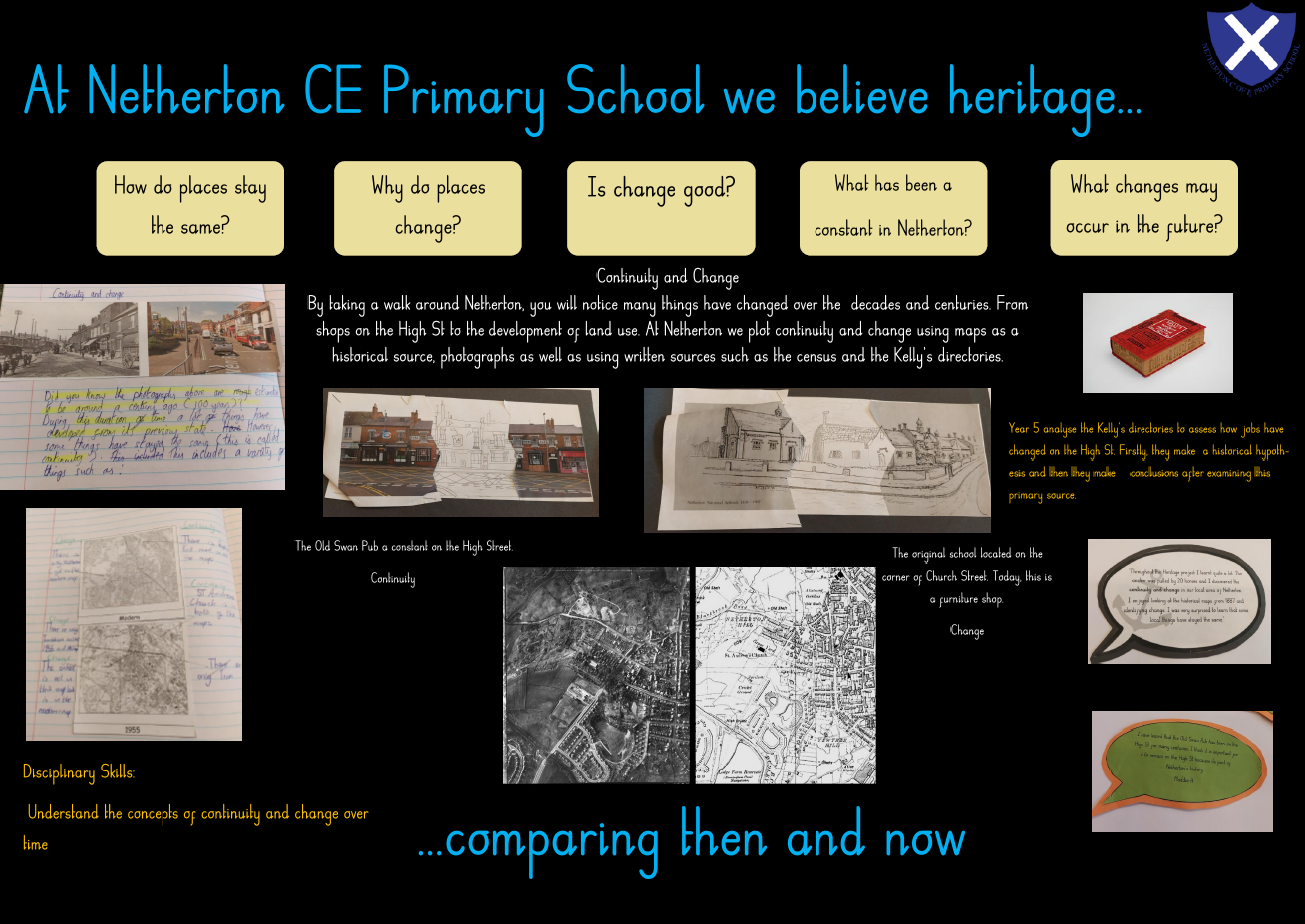
In Geography, pupils progressively develop mapwork and fieldwork skills. They learn to locate, observe, record, compare and interpret features of the local area and increasingly use maps as sources of geographical and historical information. In History, pupils work with primary sources, develop historical enquiries, use census material and investigate continuity and change within Netherton.
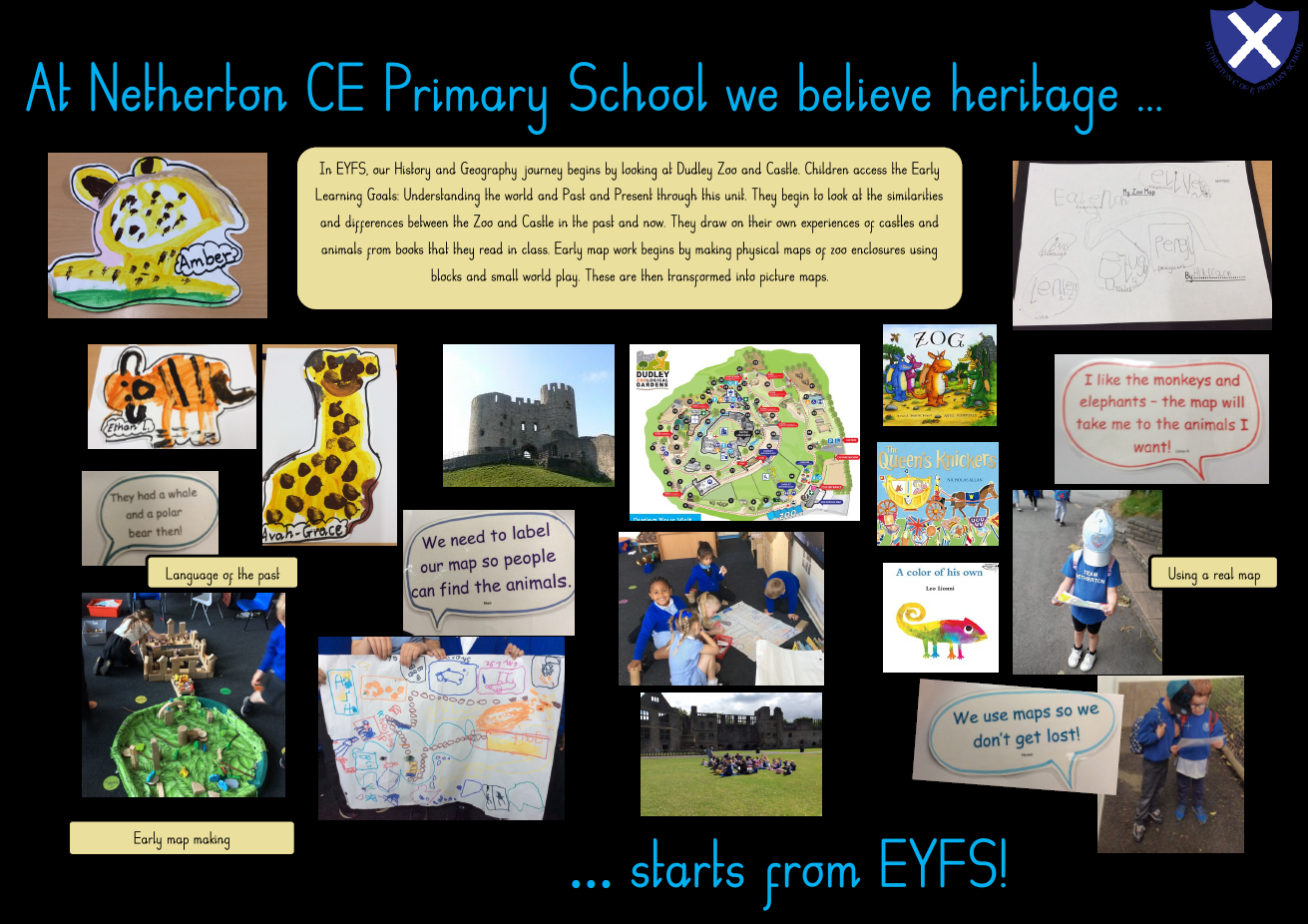
Reception provides the foundations for later learning by introducing children to key ideas such as past and present, place, change, simple maps, observation and features of their immediate environment. This gives pupils a purposeful starting point for more formal History and Geography learning in Year 1.
Teachers have received training from Historic England in using maps as primary sources and in fieldwork. This subject-specific professional development supports consistent, high-quality teaching and enables staff to model the disciplinary thinking expected of historians and geographers.
Each lesson identifies planned ‘Golden Nuggets’: the essential knowledge pupils are expected to know and remember. These are revisited to strengthen retention and help pupils connect new learning with what they already know. Exit Tickets are used at the end of lessons to check understanding and identify misconceptions or gaps. A Final Exit Ticket at the end of the unit assesses pupils’ cumulative understanding and informs teacher assessment and future planning.
The culmination of the progressive project takes place in Year 6. Pupils draw together the historical knowledge, geographical understanding, map skills, fieldwork and enquiry skills developed throughout school. They become tour guides for Netherton and communicate their expertise to a real audience through a website and interactive map of the local area.
Impact
The impact of the Heritage Curriculum is seen in pupils’ growing ability to talk confidently and knowledgeably about Netherton. Children build upon prior learning each year rather than encountering local heritage as a one-off topic. This cumulative approach enables them to make connections between people, places and periods and to explain how and why their local area has changed.
Pupils increasingly demonstrate the disciplinary skills of historians and geographers. They can use and interpret maps, undertake purposeful fieldwork, examine primary sources, use census evidence to answer historical questions and identify continuity and change. As they progress through school, they become more independent in selecting and using evidence and in communicating conclusions.
Golden Nuggets and Exit Tickets provide regular evidence of what pupils know and remember. Teachers use this information to address misconceptions and gaps during the unit. Final Exit Tickets provide an end-point assessment of the knowledge and understanding pupils have secured and help subject leaders evaluate progression across year groups.
Heritage Walks allow pupils to connect classroom learning with the real environment. Pupils see evidence of the past and geographical processes first-hand, strengthening their sense of place, cultural understanding and appreciation of the community in which they live.
By Year 6, pupils are able to draw together seven years of progressive local learning. Their role as Netherton tour guides, and their production of a website and interactive map, provide an authentic outcome through which they demonstrate knowledge, historical enquiry, geographical fieldwork, map skills, digital communication and pride in their local area.
The intended end point is a pupil who sees themselves as a knowledgeable member of their community: someone who can explain Netherton’s heritage, investigate evidence critically, understand change over time and use geographical and historical skills confidently in the next stage of education.
Potential Careers
- Historian
- Geographer
- Teacher
- Archaeologist
- Museum curator or education officer
- Heritage manager
- Archivist or librarian
- Town planner
- Cartographer / GIS specialist
- Surveyor
- Environmental consultant
- Tour guide
- Local government / community development
- Academic researcher
- Documentary maker
- Digital content or website creator
Tom Hicks Photography Project
Year 5 and Year 2 took part in a collaborative Photo walk around Netherton with the photographer Tom Hicks. This was part of the Heritage work that both classes have focussed on in the summer term. We were lucky enough to be the first primary school that Tom has worked with due to our ongoing work with The Black Country Museum.
The children thoroughly enjoyed viewing their local area from a different perspective reflecting on how much Netherton has to offer!
📷Through the Lens Photography Competition 📷
Today, we were lucky to invite Tom Hicks, a local photographer, into school to judge our photography Competition.
The winners were:
1st- Cole Bullock
2nd- Ky-Layah Gordon Reid
3rd- Tillie Campbell
Thank you to everyone who took part.