Computing
Subject Leader: Miss H Griffiths
Intent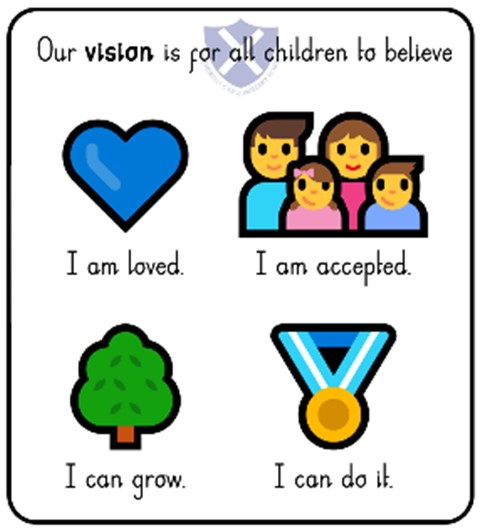
At Netherton C E Primary School, we want all children to be enthusiastic and able learners of computing and eager to achieve their very best. Computing is to be held in high regard, as a stand-alone subject, as well as embedding it through other National Curriculum subjects, giving children rich opportunities and experiences where they know they can grow in their knowledge and skills.
As Tim Berners-Lee, inventor of the World Wide Web, said, 'This is for everyone,' reminding us that computing should be accessible and empowering for all learners. We place high importance on E-Safety and equipping the children to be safe in an increasingly digital world, fostering confidence so that every child believes 'I can do it'.
We will provide all children, regardless of ethnic origin, gender, class, aptitude or disability, with a broad and balanced computing curriculum ensuring each child feels valued, supported and empowered to succeed.
Implementation
In ensuring high standards of teaching and learning in computing, we implement a curriculum that is progressive throughout the whole school. Computing is taught in termly block. These units of work focus on the knowledge and skills outlined in the National Curriculum and are responsive to our children’s interests, as well as the context of the local area. At Netherton, we believe it is important for children to reflect critically on what they have learnt, enabling them to take ownership of their learning. Each computing unit provides opportunities to apply reading and writing skills as a means of gaining and sharing knowledge.
Our computing curriculum aims to inspire our pupils, allowing them to solve problems and work both independently and as part of a team. We place emphasis on developing a range of skills, supporting our children to become effective problem solvers. This, in turn, enables them to apply this to other situations, which we believe is a key life skill. Computing also allows children to develop mathematical skills alongside their language development, using a range of programming languages. Emphasis is placed on analytical thinking and questioning, helping children to develop a coherent knowledge and understanding of computing. Additionally, there is a clear focus on key subject specific vocabulary, which progresses through year groups. Our overall aim is for children to see computing as an on-going process, rather than a one-off event.
The teaching of computing is monitored by the subject leader through lesson observations, work scrutiny, staff feedback and pupil voice. The subject leader supports staff to ensure quality first teaching of computing.
Impact
Outcomes in computing demonstrate the children’s acquisition of key skills. Children develop knowledge of how to stay safe online, preparing them for an increasingly digital world. By the end of Year 6, they will be able to programme using a variety of different languages, critically analysing and explaining their reasoning. They are able to make connections between coding languages and how technology works in the wider world, offering solutions to different situations. Children talk enthusiastically about their learning in computing and are eager to further their knowledge in the next stages of their education, leaving Netherton with a love of the subject and the skills needed to succeed in an increasingly digital society.
Characteristics of a Computer Scientist
- Competence in coding for a variety of practical and inventive purposes, including the application of ideas within other subjects.
- The ability to connect with others safely and respectfully, understanding the need to act within the law and with moral and ethical integrity.
- An understanding of the connected nature of devices.
- The ability to communicate ideas well by using applications and devices throughout the curriculum.
- The ability to collect, organise and manipulate data effectively.
Potential Careers
- Software Engineer
- Web Developer
- Games Developer
- Data Scientist
- IT Project Manager
- AI Engineer